
Why Everyone Is Talking About Virtual Fitting Rooms in 2026 (And You Should Too)

Scroll through any fashion feed right now. Check your LinkedIn. Ask your favorite retail analyst. You'll notice a pattern: virtual fitting rooms are everywhere in the conversation.
This isn't a passing trend or another tech gimmick fighting for attention. This is your moment to understand why 2026 has officially become the year virtual fitting rooms crossed from "nice-to-have" to "absolutely essential": and why you should care whether you're a shopper, a brand owner, or simply someone who's tired of returning clothes that looked nothing like they did online.
Let's break it down.
The Numbers Don't Lie: Virtual Fitting Rooms Are Having Their Moment
Here's the thing about 2026: the virtual fitting room market has hit approximately $9.81 billion in value. And experts project it will exceed $20 billion by 2030. That's not hype: that's a seismic shift in how people shop.
But why now?
The answer is simple: the technology finally caught up with the promise. For years, virtual try-on experiences felt clunky, inaccurate, or required expensive hardware that only mega-brands could afford. That's changed. Advanced mobile networks and edge computing now deliver real-time virtual fitting experiences directly through your phone's browser or app: no special equipment required.
This is your sign that the playing field has leveled. Small boutiques and major retailers alike can now offer the same sleek, accurate virtual fitting room experience.
The Problem Virtual Fitting Rooms Actually Solve
Let's be honest about online shopping's dirty little secret: returns are killing the game.
You've been there. You order three sizes of the same jeans "just in case." Two get shipped back. The brand eats the shipping cost. The planet absorbs the carbon footprint. And you? You wasted time waiting for packages that never fit right.
Here's what the data tells us:
66% of customers say augmented reality technology helps them trust the quality of items they're browsing online
40% of customers who use AR to try clothes on are less likely to return their purchases
That's not a marginal improvement. That's a fundamental shift in consumer confidence: and it translates directly to happier customers and healthier bottom lines for retailers.
Virtual fitting rooms solve the two biggest problems in e-commerce fashion: uncertainty about fit and uncertainty about style. When you can see realistic proportions on your actual body before you click "buy," you make smarter decisions. Period.
Why 2026 Feels Different (Spoiler: It Actually Is)
You might be thinking: "Haven't we been hearing about virtual try-ons for years?"
Fair point. But here's what makes this year the tipping point:
1. The Tech Has Matured Beyond the Gimmick Stage
Early virtual fitting rooms were... rough. Avatars that looked nothing like you. Clunky interfaces. Clothes that floated awkwardly over cartoon bodies. Not exactly the high-fashion experience anyone wanted.
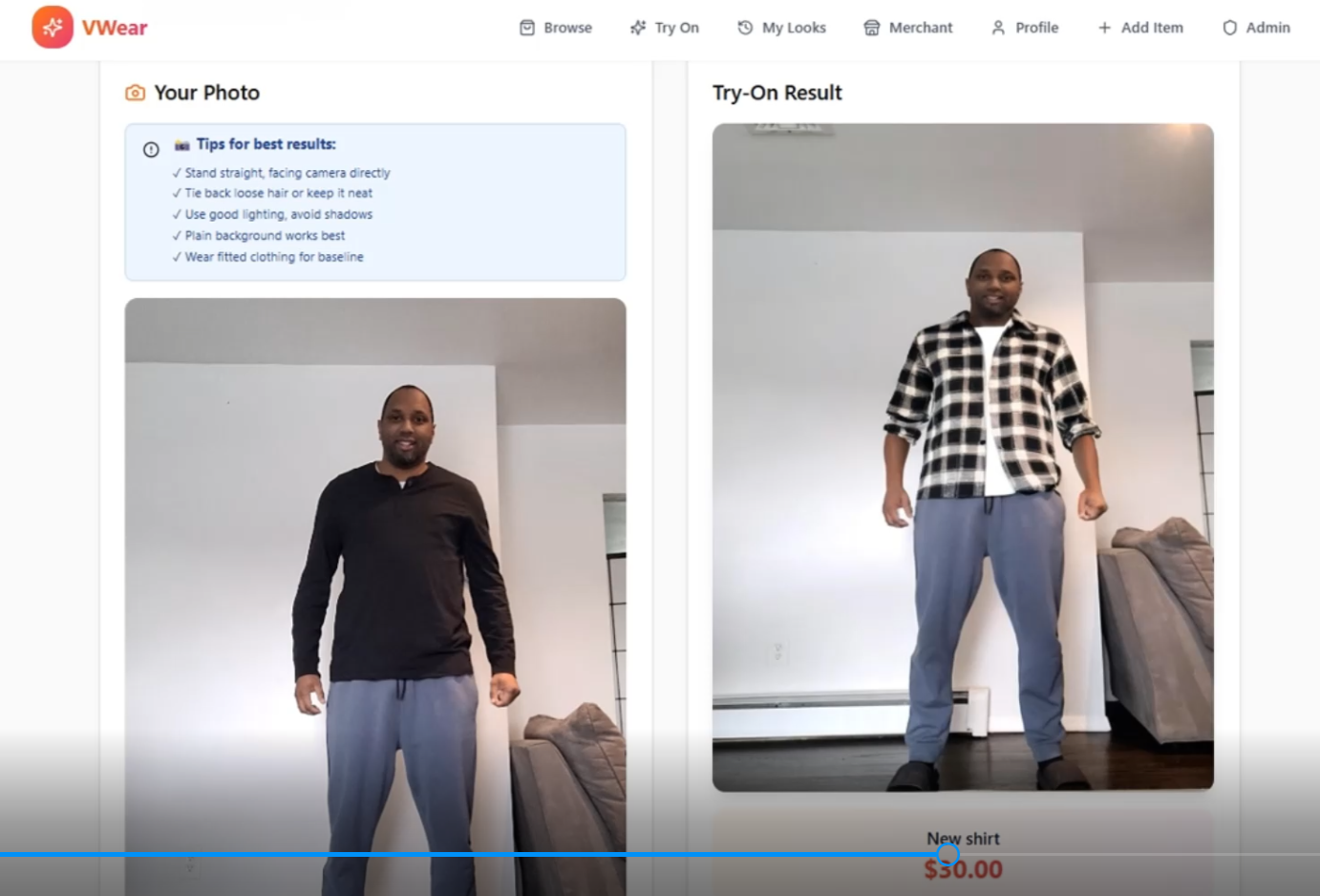
In 2026, AI body measurement technology and 3D avatar rendering have reached a level where the experience actually works. You upload a photo, the system maps your proportions, and suddenly you're seeing how that blazer actually drapes on your shoulders: not some generic mannequin.
2. It's Accessible to Everyone
This is huge. The democratization of virtual fitting technology means you don't need a Fortune 500 budget to implement it. Mid-sized brands, independent designers, and growing e-commerce stores can all plug into virtual fitting room solutions without breaking the bank.
3. It's Become Core Infrastructure, Not a Novelty
Major players like H&M and Balmain have integrated sophisticated systems combining AI body measurement with 3D rendering. Customers can start a try-on session on their phone during lunch, save their favorites, and complete the purchase in-store that evening. It's omnichannel retail done right.
The Fun Factor: Shopping Should Feel Good
Here's where things get exciting: and where VWEAR's "fun" DNA really shines.
Virtual fitting rooms aren't just practical. They're genuinely entertaining.
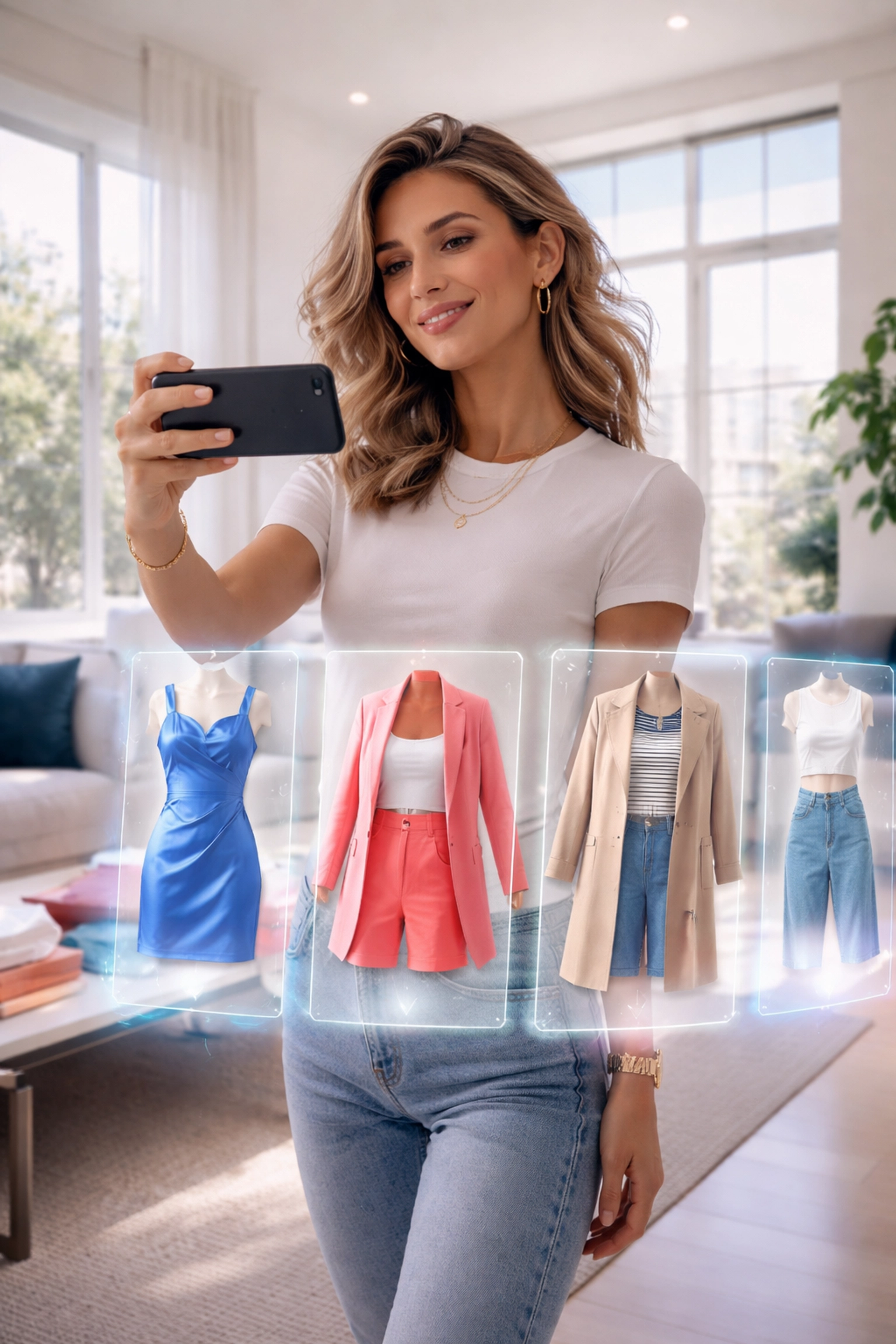
Think about it: you can experiment with styles you'd never pick off a rack. Try that bold pattern. See how a statement coat looks on you without the commitment. Share your virtual try-on with friends and get their honest opinion before you buy.
Social commerce integration has amplified this even further. Customers share virtual try-ons with friends and influencers, turning shopping into a collaborative, social experience rather than a solitary scroll-and-hope situation.
This is your permission to play with fashion again. Virtual fitting rooms bring back the joy of a fitting room experience: minus the harsh lighting and awkward wait for an available stall.
Convenience Meets Accuracy: The VWEAR Approach
At VWEAR, we've built our virtual fitting room technology around three core principles:
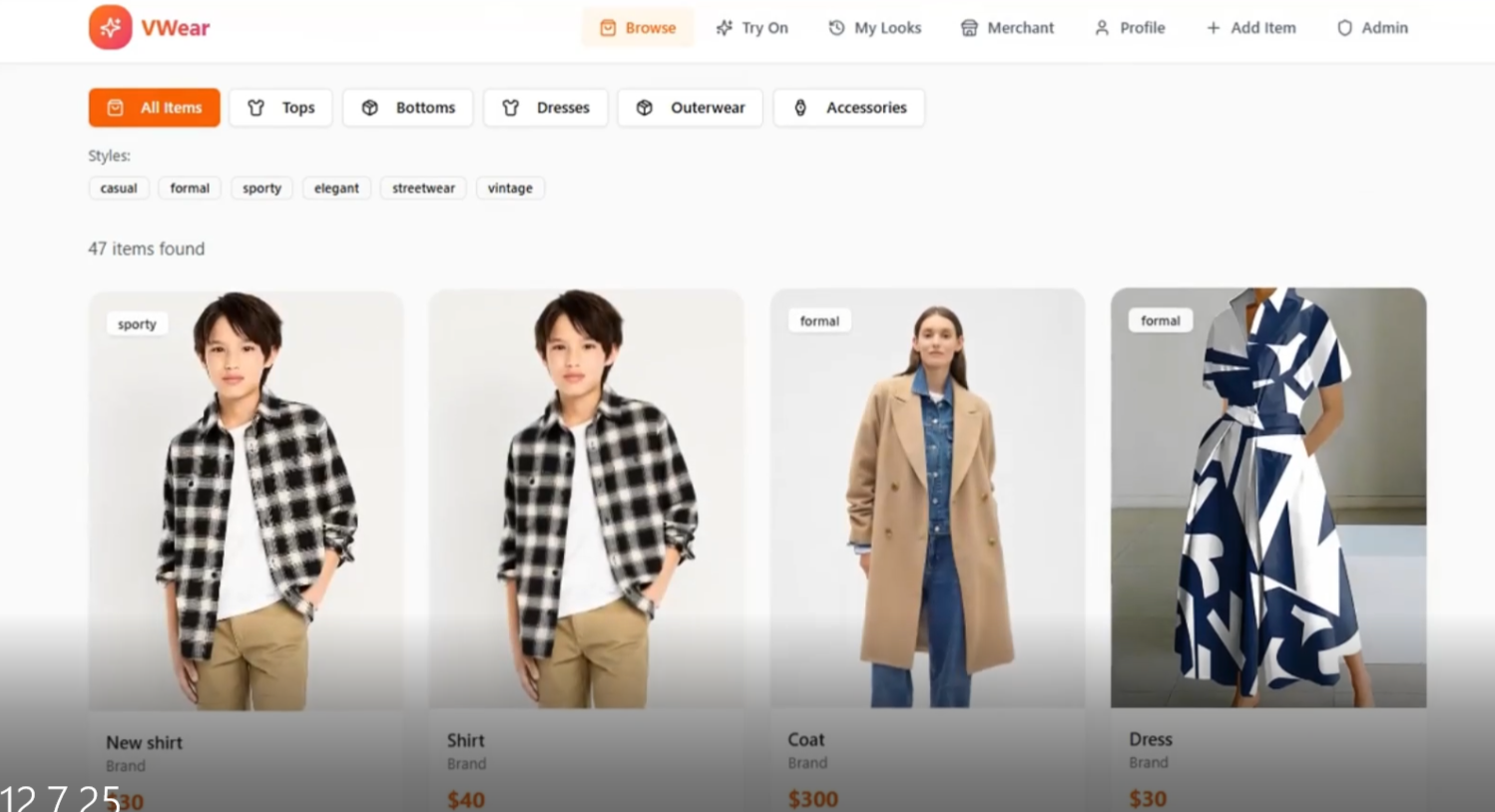
Convenience: Your customers should be able to try on clothes from anywhere: their couch, their commute, their coffee break. No apps to download. No complicated setup. Just snap a photo and start exploring.
Accuracy: Our AI-driven size recommendations analyze real body proportions to suggest the right fit. No more guessing between a Medium and a Large. No more ordering multiples "just in case."
Fun: Shopping should spark joy, not stress. Our interface keeps things playful and engaging while delivering serious results.

What This Means for Retailers
If you're running an e-commerce fashion business, here's your reality check for 2026:
Conversion rates improve when customers can visualize themselves in your products
Return rates drop when fit uncertainty disappears from the equation
Customer trust increases when you offer transparent, accurate try-on experiences
Brand differentiation becomes easier in a crowded market
Physical stores are already catching on: 66% of the virtual fitting room market is captured by brick-and-mortar locations retrofitting dressing rooms with AR mirrors. These smart mirrors suggest accessories, capture fit feedback, and create a seamless bridge between in-store and online experiences.
The question isn't whether virtual fitting rooms will become standard. The question is whether you'll adopt them before or after your competitors do.
What This Means for Shoppers
And if you're a consumer who's simply tired of the return-and-wait cycle, here's what you gain:
More confidence in every purchase
Less waste: fewer boxes shipped back and forth
More fun experimenting with styles you'd never try in a physical store
Better personalization through AI-driven recommendations that actually understand your body
This is your upgrade from "hope it fits" to "know it fits."
How to Get Started
Ready to experience what everyone's talking about?
If you're a shopper, head to VWEAR's virtual fitting room and see for yourself how trying on clothes online should actually feel.
If you're a retailer looking to integrate virtual fitting room technology into your website, VWEAR makes it easy to get started. No massive IT overhaul. No steep learning curve. Just a smarter, more engaging shopping experience for your customers.

The Bottom Line
Virtual fitting rooms in 2026 aren't a trend: they're the new standard. The technology has matured. The business case is proven. The customer demand is clear.
Whether you're looking to reduce returns, boost conversions, or simply make online shopping feel less like a gamble, virtual fitting rooms deliver.
This is your year to stop wondering and start trying.
Explore VWEAR's virtual fitting room today →
Comments