
Stop Wasting Time on Size Charts: 7 Quick Hacks to Shop Smarter Online

Let's be real: size charts are the worst part of online shopping. You're vibing with a cute jacket, ready to add it to your cart, and then... bam. A confusing grid of measurements appears. Should you measure your chest or your bust? Is that in inches or centimeters? And why does a "medium" from Brand A fit like an "extra-large" from Brand B?
If you've ever stood in your bedroom with a measuring tape, desperately trying to figure out if you're a size 8 or a 10, you're not alone. The average online shopper returns 20-30% of their purchases, and sizing issues are the number one culprit.
But here's the good news: you don't have to be a mathematician to shop online successfully. This is your guide to shopping smarter, faster, and with way fewer returns cluttering up your doorstep.
Hack #1: Create Your Personal Brand Bible
Think of this as your shopping cheat sheet. Every time you order from a brand and the fit is perfect, write it down. Keep a simple note on your phone with brand names and your go-to size for each one.
For example: "Zara - Small tops always fit. Medium in dresses." Or "Nike - Always size up in shoes."
This hack saves you from starting from scratch every single time you shop. You've already done the hard work once, now just reference your notes and skip the measuring tape entirely. It's like having a personal stylist in your pocket, except it's just... you from three months ago being really helpful.
Hack #2: Let Other Shoppers Do the Work
Reviews aren't just for checking quality, they're goldmines for sizing intel. Scroll past the five-star raves and look for specific comments about fit.
When you see multiple people saying "runs small" or "size up for comfort," that's your signal. If ten different shoppers with different body types all say the same thing, trust the crowd. They've basically done your homework for you.
Pro tip: Look for reviews from people who mention their usual size and what they ordered. "I'm normally a medium, ordered a large based on reviews, fits perfectly!" That's the information you need.
Hack #3: Know Your Geography
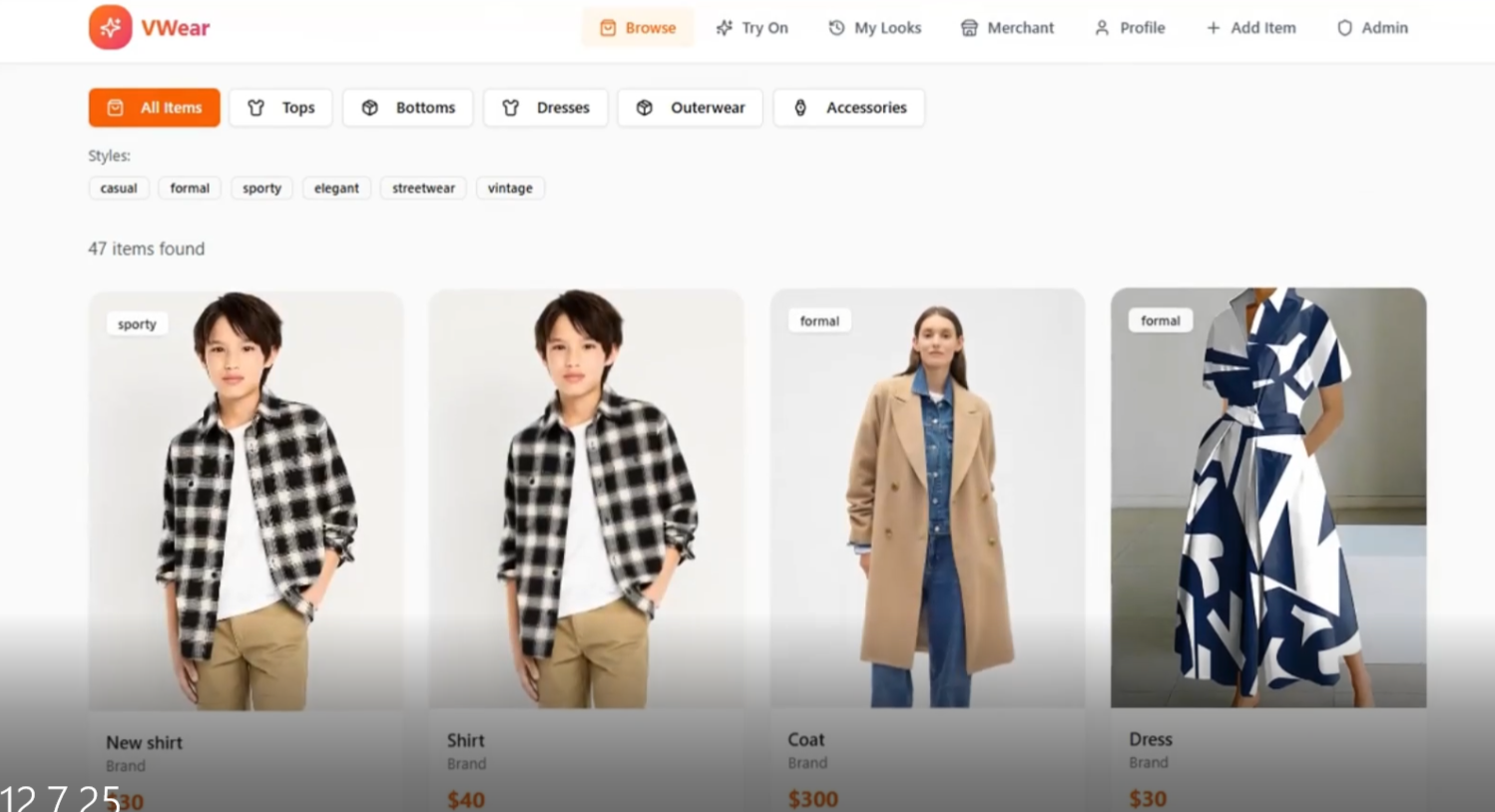
Here's something most people don't think about: where your clothes are made actually matters for sizing. European brands tend to run larger than Asian brands. American sizes usually have more room than UK sizes.
If you're ordering from an international retailer, check the product description for the country of origin. An Asian size "large" might fit more like a Western "medium." This isn't about stereotypes, it's just different manufacturing standards across regions.
Quick reference: If it's made in China, Japan, or Korea, consider sizing up. European brands? You might be able to size down. American brands usually run true to a slightly generous fit.
Hack #4: Fabric Is Your Friend (or Enemy)
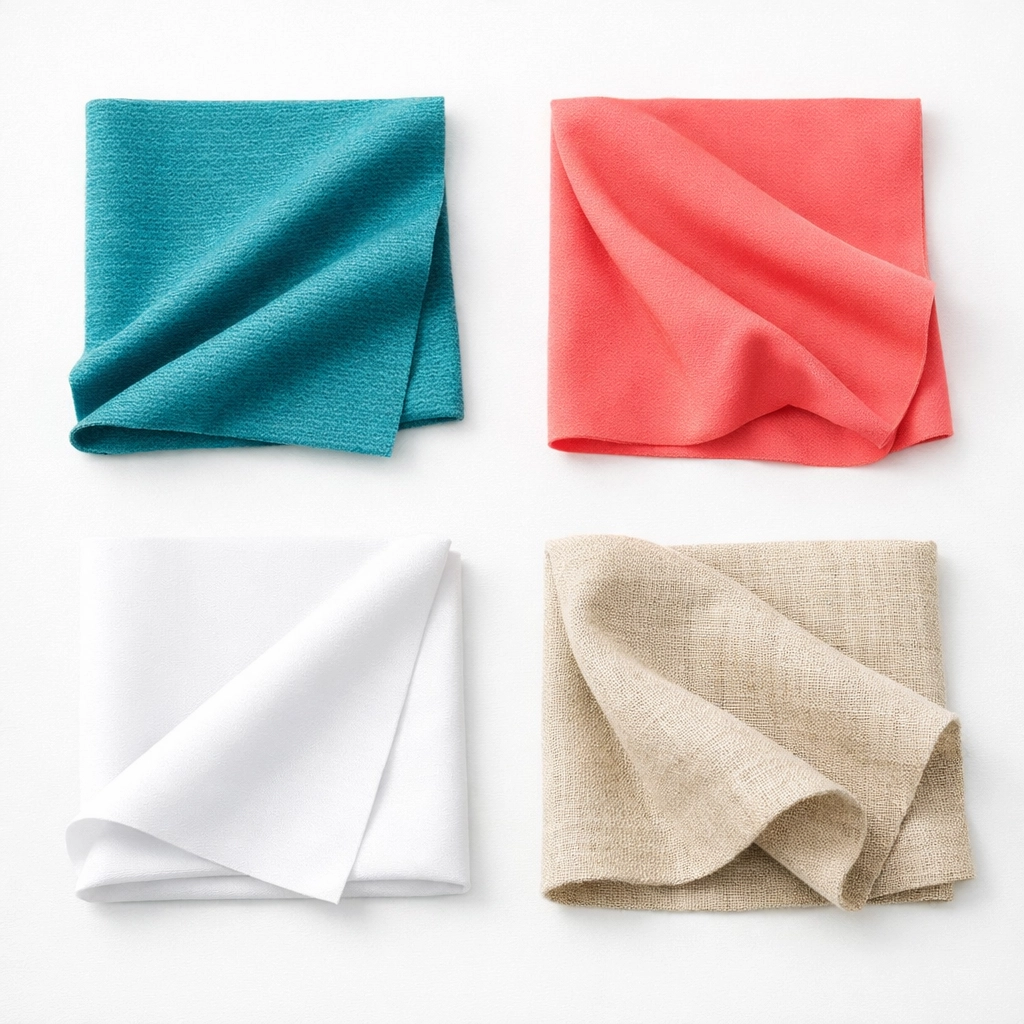
Not all fabrics are created equal when it comes to sizing flexibility. Stretchy materials like spandex, lycra, and jersey knit are forgiving. They'll work with your body rather than against it.
Cotton, linen, and structured fabrics? Not so much. They're less flexible, which means sizing needs to be more precise.
Here's the hack: If something has 5% or more elastane/spandex, you have wiggle room with sizing. Ordering a shirt in a rigid cotton weave? Stick closer to exact measurements. The fabric type tells you how much you can fudge the numbers.
Hack #5: Stalk the Model (In a Non-Creepy Way)
Most product pages include model measurements somewhere in the description. "Model is 5'8" and wearing size Small." This is valuable information.
If you're close to the model's height and build, you can visually assess how something will fit you without touching a measuring tape. Does the dress hit the model mid-thigh and you want it longer? Size up. Does the shirt look fitted on them and you want it looser? Go a size bigger.
This visual shortcut works surprisingly well and takes about five seconds. Your eyes are better at estimating fit than your brain is at calculating measurements anyway.
Hack #6: Pick One Chart and Commit
Instead of comparing your measurements across five different size charts from five different websites, find one detailed chart from a brand you trust and use it as your baseline.
Measure yourself once using that chart. Write down those measurements. Now when you shop elsewhere, you can reference how your measurements align with your known sizes from that trusted brand.
This eliminates the exhausting process of re-measuring yourself every time you want to buy a t-shirt. You already know your measurements, now just compare them to new charts quickly.
Hack #7: The Ultimate Game-Changer, Virtual Fitting Rooms
Okay, here's where we talk about the solution that makes all the other hacks look old-school. Virtual fitting rooms are basically magic for online shopping.
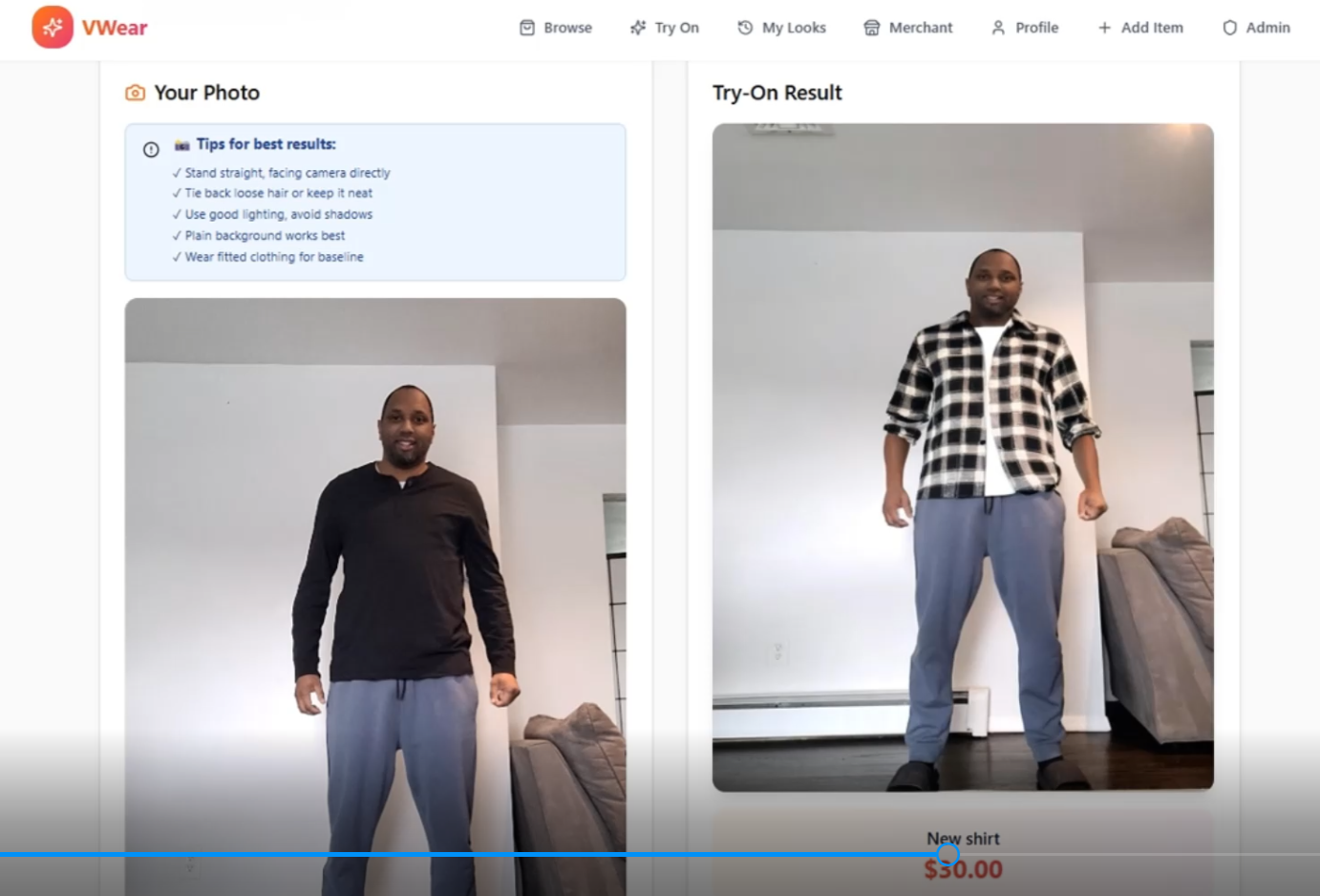
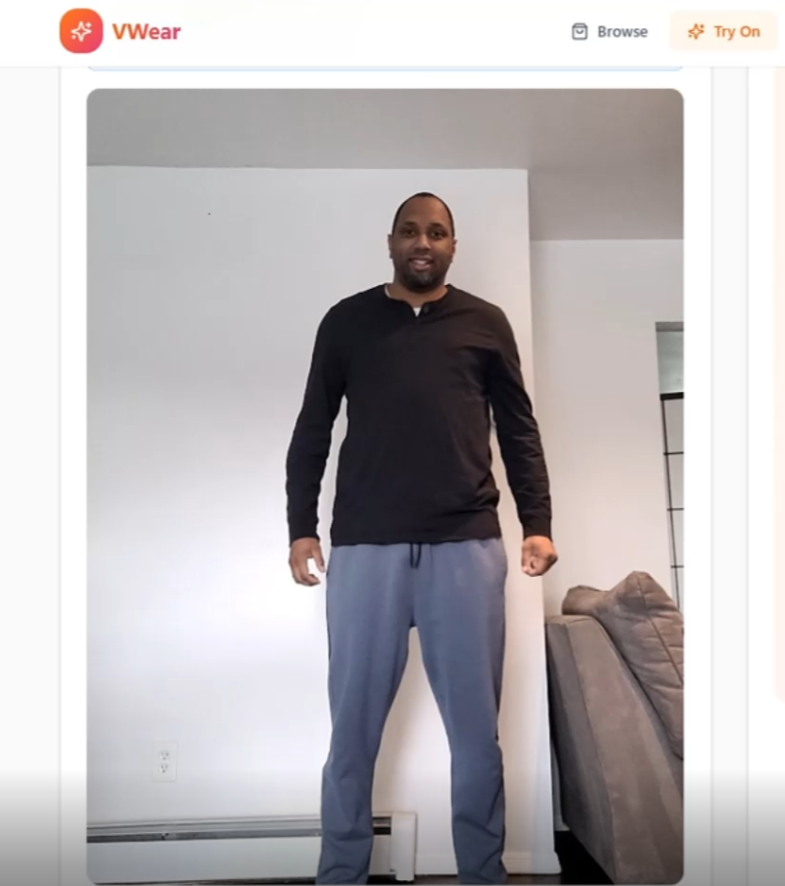
Instead of guessing how clothes will look on your actual body, you can see them. Upload your photo, select an item, and watch it appear on you in real-time. No measuring tape required. No mental gymnastics trying to imagine how fabric will drape. Just... see it.
This is the technology that finally bridges the gap between online convenience and in-store confidence. You're not just looking at a model who's six inches taller than you: you're seeing how that exact shirt looks on your shoulders, your torso, your proportions.
The best part? You can try on multiple sizes in seconds. Wonder if you should size up in those jeans? Try both sizes virtually and see which looks better. It's like having a fitting room in your living room, except you don't have to awkwardly hand rejected clothes back to a sales associate.
Bonus Hack: Shop Where Returns Are Easy
This one's simple but crucial: prioritize retailers with free, hassle-free returns. When you know you can easily send something back, the pressure to get sizing perfect on the first try evaporates.
Some stores even offer free exchanges, which is even better. Order two sizes if you're unsure, keep what fits, send back what doesn't. Zero stress, zero cost.
The Bottom Line
Size charts aren't going away anytime soon, but you don't have to let them control your shopping experience. With these hacks: especially virtual fitting room technology: you can shop confidently without becoming a human calculator.
The future of online shopping isn't about better size charts. It's about eliminating the need for them entirely. Why guess when you can see?
Ready to stop playing the size chart guessing game? Check out how VWEAR's virtual fitting room technology can transform your online shopping experience. Upload your photo, try on clothes virtually, and finally see what you're buying before you buy it. Because shopping online should be fun, not frustrating.
Comments